
Float is an estimate of tradable supply
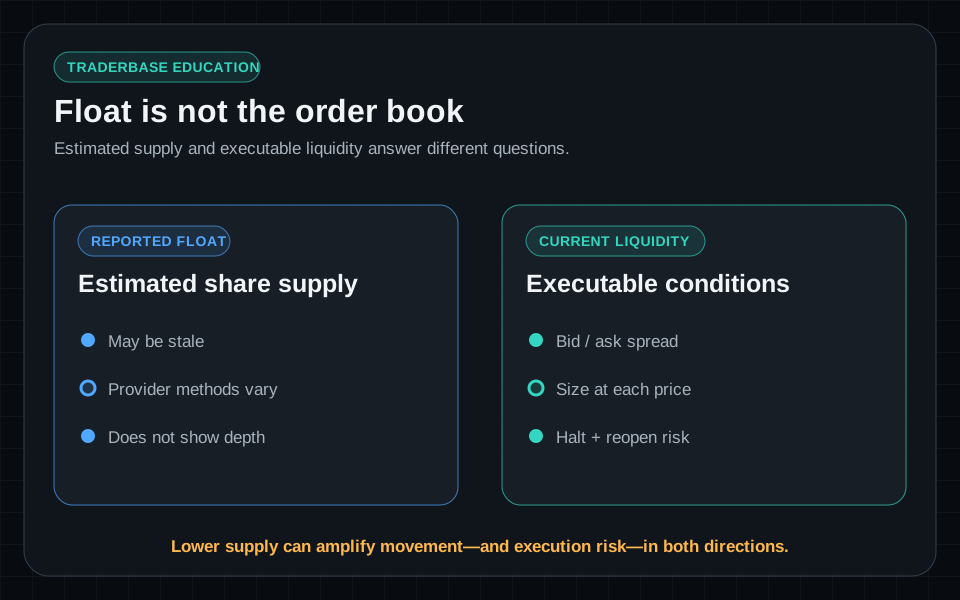
Public float generally describes shares available for public trading after excluding certain closely held or restricted shares. Providers can calculate it differently, update it on different schedules, or leave it unavailable.
A scanner should display the provider value and its availability rather than presenting float as perfectly current. Corporate actions, offerings, conversions, warrant exercises, and resale registrations can make an older value less representative of current supply.
Low float can amplify both movement and execution risk
When available supply is limited relative to demand, price can move quickly. The same condition can produce wide spreads, thin depth, sharp reversals, volatility pauses, and exits that fill far from the intended price.
Low float does not guarantee upward movement. Selling pressure, dilution concerns, failed catalysts, or disappearing liquidity can produce equally violent declines.
- Treat float as one field, not the setup.
- Require sufficient absolute and dollar volume for the intended size.
- Inspect spread behavior and reported prints before acting.
- Assume stops can fill worse than their trigger in fast markets.
Combine float with participation and catalyst filters
A low-float scanner becomes more useful when combined with supported price, change, gap, premarket volume, relative volume, dollar volume, news, and session filters. These conditions ask whether the stock is active now, not merely whether its reported float is small.
Market cap can further define the universe, but it is not a substitute for float. Two companies with similar market caps can have very different public supply and liquidity profiles.
Check dilution and corporate-action context
Recent offerings, at-the-market programs, warrants, convertible securities, resale registrations, and reverse splits can change the supply and risk picture. SEC filings and offering context should sit beside the scanner result so the trader can inspect what is known.
Available context can still be incomplete or delayed. A scanner cannot guarantee that every financing instrument or corporate action has been identified.
Plan for halt and resumption behavior
Rapid low-float moves can enter volatility pauses. During a halt, there is no continuous execution, and a reopening price can differ materially from the last trade. Halt information is therefore risk context, not an entry signal.
Use provider status and resumption information when entitled, keep position size bounded, and never assume an exit will be available at the pre-halt price.
Educational content only. Trading involves substantial risk, and scanner events are not recommendations to buy or sell securities.
Common questions
Questions about this scanner workflow
What float is considered low?
There is no universal cutoff. Traders often define a threshold for their own universe, but provider methodology, volume, market cap, price, liquidity, and corporate actions all affect how useful that threshold is.
Does low float mean a stock will rise?
No. Limited supply can amplify movement in either direction and can increase spread, slippage, halt, and exit risk.
Why might float data be unavailable or stale?
Float is reference data derived from filings and share classifications rather than a direct live market print. Provider methodology and update schedules vary.